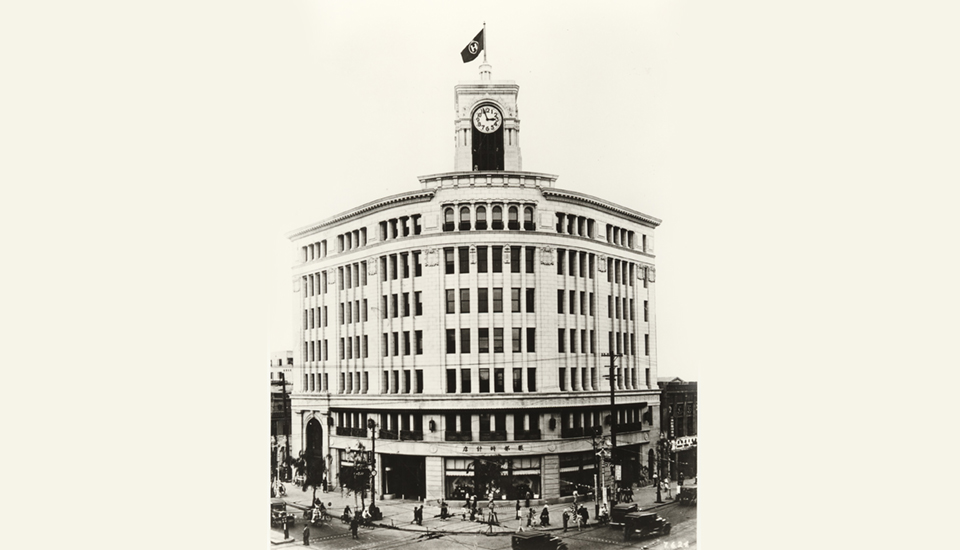
There are few brands as popular as Seiko. In 2024, the manufacturer had revenue of 1.88 billion USD; this number would put them in 7th place over the highest-grossing Swiss watch brands. Seiko has higher revenue than brands like Longines, Breitling, Vacheron Constantin, and IWC. That being said, Seiko is not on that list of the biggest Swiss manufacturers; one of their best qualities is the fact that they are not Swiss but rather Japanese, and the biggest part of the Japanese watch market that has grown exceptionally in the last 50 years. What is the reason for this increase in quality Japanese watch brands, and the interest in the brand? We will go over that and more as we tell you the story of Seiko.
In 1860, in the city of Tokyo a man is born Kintaro Hatorri, he comes from a financially secure family with a liniage of merchants, at only 13 years old he started studying business and engineering, only a year later he was the apprentice of Kobayashi Denjiro, who was one of the prime watchmakers in Japan at the time.
At 21 years old, he started his first company, K Hattori & Co. This was a watch company, but not a watch maker; rather, it was a retailer for watches from Switzerland. After 10 years of retailing, they started producing their own watches. He does that in a factory that he opened in Tokyo and named Seikosha. That name, of course, evolves into the Seiko we know today. The name Seikosha bears meaning in Japan; Seiko means minute, success, and exquisite, and sha means house.

In 1913, Kintaro Hatorri took a big step in molding the Seiko brand. Up until then, all wrist watches had been imported from Switzerland, but thanks to Hatorri, that was about to change, as in 1913, he released the first Japanese wrist watch. The date is pretty controversial. Seiko claims that this is the year that the Laurel watch and the first wristwatch were released. The fact of the matter is that the Laurel watch was certainly produced in 1913, but in the form of a pocket watch, and it was not made into a wrist watch until 1915.
That is not the only controversy surrounding the first Japanese wristwatch, as clues speak of a watch named the Empire, also produced by Seiko was first, originally made as a pocket watch in 1909, and in 1913, it was converted into a wristwatch. If you search for it, you can find old catalogs that support the theory that the Empire was first. The official story from Seiko says that the Laurel watch was first. I don’t have enough evidence to say they are wrong and that this is a misunderstanding of their own history. So we will go with the official story for now

10 years later, tragedy struck the Japanese nation, as the great Kanto earthquake, which was measured 7,9 on the Richter scale, shook the city of Tokyo and its neighboring towns. This earthquake was devastating and estimates show that around 100.000-140.000 people lost their lives, and a further 2.5 million were rendered homeless.
Seiko’s factory burned down as a result of the earthquake, but Kintaro Hatorri did not let that stop him; only three months later, the new factory was up and running. A year later, Seiko announced itself to the world as the first watch to bear the name Seiko on the dial was released to the public. From that point, they have not looked back as they have become a household name.

Only a decade on from rebuilding the factory, the founder Kintaro Hatorri, passed away at 74 years old. He leaves the company in the hands of his son, Genzo Hatorri, who kept building on the legacy of his father, and in 1936, the company was producing over 2 million watches a year. As with all stories that talk about old brands, the Second World War grinds everything to a halt as brands need to shift focus to help with the war effort. The war not only had a big effect on the production capacity of Seiko but also the economic situation in Japan and the financial situation of Japanese citizens. As the biggest watch and clock maker in Japan at the time, Seiko got the assignment of making watches for the military. Seiko does this job as with everything extremely well, and in 1938, they produced over a million watches for the army. Halfway through the war, the focus shifts, and Seiko starts producing onboard clocks for military aircraft.
Despite 2 nukes, an economy in shards, and a political situation in need of reform after the horrors of the Second World War, Seiko bounced back better and faster than expected. Only 8 years after the war, their production was back to making over 2 million watches a year; this number meant that Seiko produced over half of all Japanese watches at the time.

After nearly 30 years as the head of Seiko, Genzo Hatorri died in 1964, and he left the company in the hands of his son, Shoji Hatorri. His focus was on making Seiko into a bigger international entity, story goes that 2 years earlier he had been on a trip to Europe where he was asked if there was a watch industry in Japan. This focus could not come at a better time, as the brand was making north of 3 million units a year and had sublines like Grand Seiko and King Seiko. I won’t go into full detail of that hear as we will make a separate article talking about Grand Seiko and King Seiko, which we will link here when they go live.
This decade is probably the most important in the history of the company, as in the period between 1960- 1969, they released Grand Seiko, King Seik,o and most importantly their first quartz watch, the Seiko Astron. We won’t go over the technical innovation behind the Astron or the history behind it here, as that deserves an article of its own, but we will talk about the dramatic effect it had on the watch industry and how, in truth this one point of divergence shaped the entire landscape of the industry for a falf century to come.

This is a relatively big claim, but I think I can connect this one watch to how the market and the perception of watches evolved over the next few decades. The Seiko Astron was the first commercially produced timepiece to use quartz crystals to regulate the timekeeping of the watch. This evolution made the watches cheaper and more efficient to produce, as well as being more accurate. Another quality was that these watches would keep going until the battery ran out; instead of having to rewind the watch after a few days of not being used, you could just pick these watches up after months of not being used, and they would still be telling the correct time.
This made a quartz revolution in Japan and a quartz crisis in Switzerland. In Japan, brands like Seiko, Citizen, and Casio reached new heights as they embraced this revolutionary tech and used it for the biggest part of their production. All this led to Japan beating the Swiss watch industry to an inch of its life, as in the years leading up to the release of the Astron, the Swiss watch industry accounted for 85% of the market, as 19 million of the 21 million yearly units sold were from Switzerland. At the time, production was scattered as you had over 2000 different Swiss manufacturers; a few years later, there were fewer than 500. Employment also dropped drastically as it went from 90.000 people to just 28.000.

This led to many brands merging, and from that, you got conglomerates like SWATCH Groups, and most brands that stayed independent and didn’t embrace the quartz craze went under. This newfound simplicity of the quartz movement led to the start of digital watches. Seiko also innovated that design, making the first digital watch in 1973. This was the first watch with an LCD screen. From this innovation, you get brands like Casio to make watches.
After this time in the 70s and 80s, the Swiss watch market is at its lowest, and Japan completely takes over. Traditional watchmaking still exists, but in a much smaller capacity than before. Many at the time and some still think today that it’s weird that people choose mechanical watches, no matter whether it’s manual wound or an automatic, they thought you should choose the obviously superior quartz watches, or as it is today, smart watches. This downturn led to the rise of fashion watches. This new fashion brand revolution in watchmaking can be attributed in a big way to SWATCH Group and their extremely cheap production of Swiss-made quartz movements. These watches were cheap, shit, and in most cases ugly. Made to be consumed and not built to last, the exact opposite of traditional watchmaking.

All of this leads to the formation of smart watches, like you see from brands like Samsung and the most sold watch in the world, the Apple Watch. These smartwatches are the best thing to ever happen to the Swiss watch market since before the quartz crisis; sales are up and especially when we talk about mechanical watches. People got tired of this constant technological growth that is happening all around us and wanted to look back at a simpler time with simpler watches that did not complain if you sat down for 5 minutes. In COVID-19 19 this reached a breaking point as the second-hand market took to the stars as it grew at a never-before-seen rate.

Thanks for reading the article. If you are not done reading about Seiko yet, please take a look at another article we wrote about them, as we talked about the ever-so-popular Seiko cocktail time.


Leave a Reply