As we enter the second part of this collaborative effort, where we look at the history of the brand, as we so often do. I really want to thank them for making this possible, as it has been a blast and an honor to work with such a historic brand. Doxa is a brand I have always been on the fence about, as I love their designs and I think they make fantastic dive watches, but at the same time, I feel they have often lacked diversity in their catalog, with every watch having the same central concept behind its design as the classic Doxa sub.
But after having a very pleasant time with a watch from them on my wrist and creating a hands-on review of it, which I highly recommend checking out once you finish this article, I am fully in the Doxa camp now, as the Sub 200T has shot up on my list of watches I want to buy. The history of the brand spans more than 140 years, and the brand, like most, has had its fair share of ups and downs. I think we should get straight into it, so without further ado, let me tell you the history of Doxa.

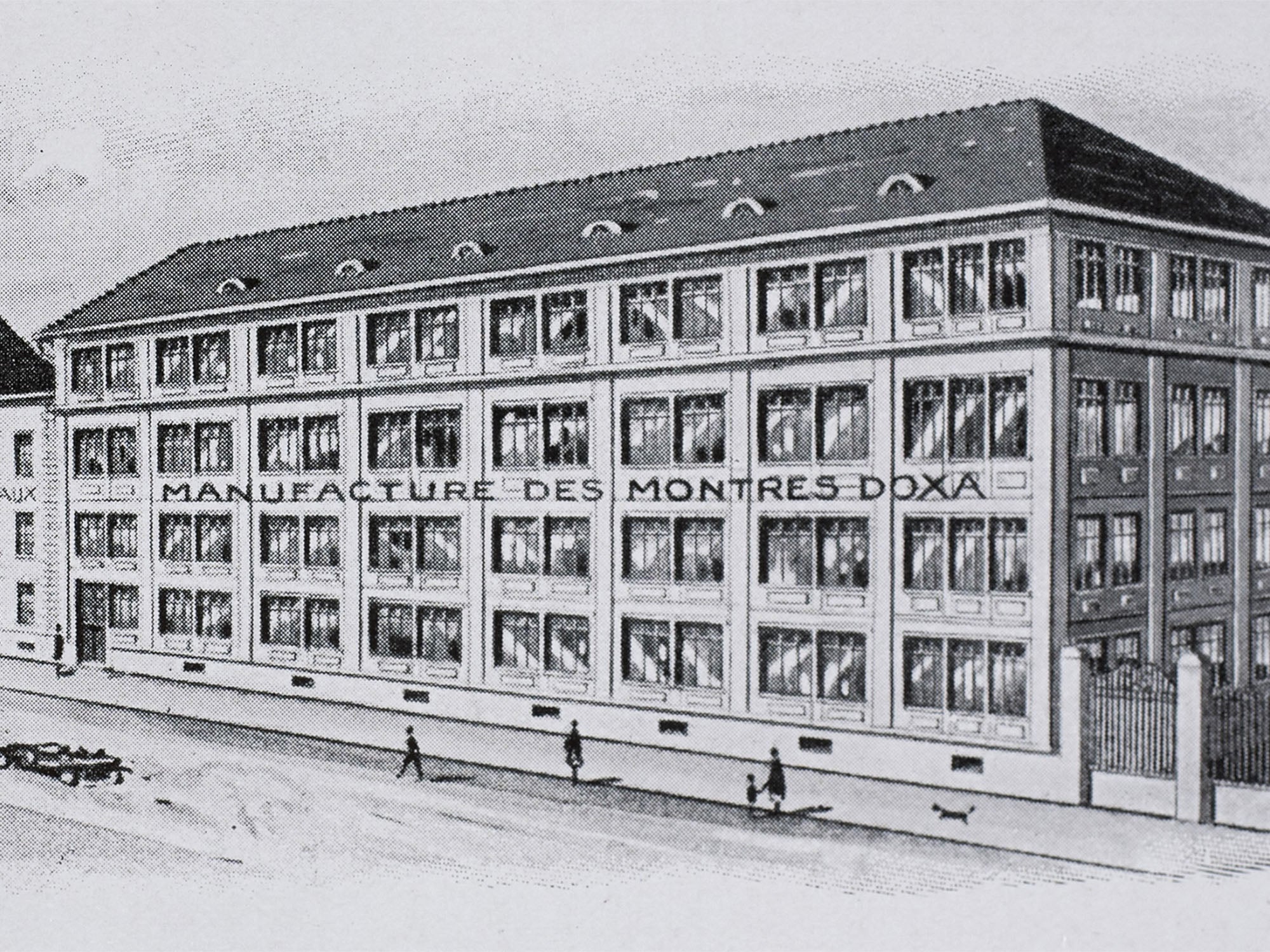
Our story starts in the Jura mountains of Switzerland with a man who was one of 13 children. As was the style at the time for poor families, the children had to start working early to contribute to the household income. In 1880, when Georges was 12, he started an apprenticeship with an established watchmaker in the area. Georges was extremely ambitious and driven, as 9 years later, at only 21 years old, he started Georges Ducommun, Fabriques DOXA. The name DOXA comes from the Greek word for glory; later, thanks to Georges, it would also signify quality, precision, and craftsmanship. It did not take long for the brand to become recognized outside of the mountainus region in Switzerland as in the start of the 20th century the brand would be lauded at shows and world fairs winning prizes for their quality and innovation, as the motorracing scene started to make its way to the public with endurance races being all the rage, DOXA’s pocket watches became standard equipment for the Bugatti team as their 8-day power reserve pocket watches became a crucial piece of tech for these long races.
That 8-day technology would later make its way into other teams as well as ships and airplanes, as having this long power reserve was instrumental for these longer-distance travels. Now DOXA would keep innovating and catering to the up and coming markets, releasing chronographs and full year calendars all the way through the 20s and 30s, but in 1936 the founder Georges Ducommun unfortunately passed away.

Enter Jaques Nardin, those familiar with the watch world and especially the dive watch scene will be familiar with the last name Nardin as Jaques is the grandson of the legendary Ulysse Nardin, founder of the brand Ulysse Nardin. Now Jaques takes over due to family ties, being the son-in-law of old Georges, he kept Georges’ innovative vision shining through with more and more complications entering the DOXA catalog. As World War 2 hit, as with most watch brands of the time, they would make a lot of watches for the military and making on board clocks and chronographs for aviation. After the war, they kept up with their chronograph production until moving into a more formal route, introducing simpler designs, even going so far as to follow the Bauhaus design language with square dress watches.
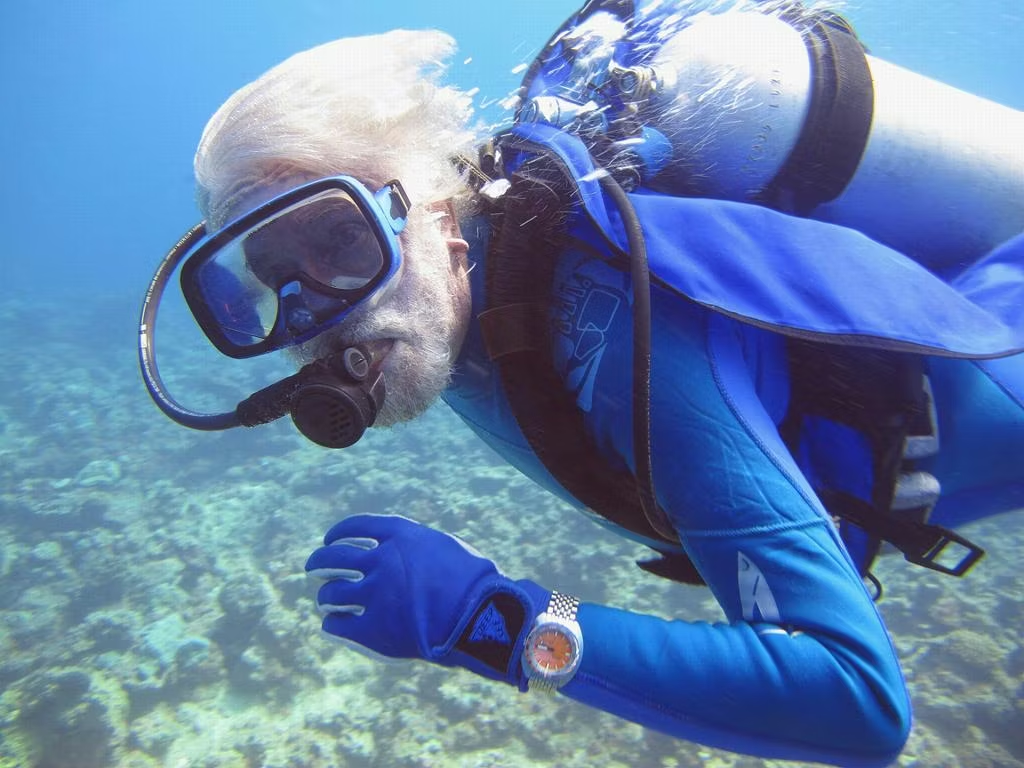
The big boom for DOXA would come in the 60s, however, as the collection they released then still shapes the brand to this day. In 1964, the dive watch SUB line was released, a fully purpose-built watch built almost exclusively for diving. Developed and designed with a legend in the diving industry, Jacques-Yves Cousteau. The iconic orange dial was there from the beginning as they searched for the color that had the best visibility in the dark depths of Lake Nauchatelm. Bright orange came out the best in their field test, and it has become the icon of DOXA ever since.

In 1967, the SUB 300 was released at Basel World. This became the first publicly available professional-grade dive watch, using the patented rotating bezel, made in partnership with the legend Jacques-Yves Cousteau. This coincides with the boom of the commercial diving and thrill-seekers community, with more and more ordinary people searching for the thrill of adventure, with the best partner to have on your wrist being a DOXA timepiece. A year later, the SUB 300T Conquistador came out, providing extra safety for saturation divers as it was one of the first adapters of the helium escape valve.
Cousteau was also incredibly important in empowering DOXA in America by negotiating an exclusive distribution contract of DOXA dive watches for his company, US Divers. The watches sold by his company would all bear the Aqua Lung logo, which Cousteau invented alongside others. The Swiss military had also seen the potential of the SUB 300T as their elite diver division was issued the DOXA SUB 300T.
As with nearly all watchbrands the quartz crisis led to a tough time for DOXA as sales went down and business got extremely tough, in 1997 the Jenny family acquired the brand, the Jenny family had been in the space for long having four generations of watchmakers, one of their first acts was to move DOXA’s headquarters to Bienne in Switzerland, then in 2019 they appointed current CEO Jan Edöcs.
Currently, the brand sits with the group of brands like Longines, Yema, and many Glashütte-based brands, being in the mid-range price point while being extremely historic. The watches from DOXA provide reliable dive watches at an attainable entry-level price. The big selling point for me is the fact that their designs have changed very little in the past 60 years, so if anyone close to you ever owned a DOXA, then chances are that you can own something similar with an updated mechanism for the modern age. The history is rather straightforward for a Swiss watch brand, but instead of many that got very focused on chronographs, DOXA established itself as one of the most iconic dive watch brands ever.
If you want to read more about DOXA, I suggest you read our hands-on review of the SUB 200 T. I want to kindly thank you for taking the time to read the article, as it helps us out a lot. I again want to thank DOXA for the collaboration, hopefully it is the start of a long working relationship.


Leave a Reply