
This article is made for a few different reasons. I want to announce that Hanhart is the first brand we work with to bring you a hands-on review, that article will be published late next week, and we are extremely excited to be working with such a historic brand. The other reason is much simpler: I just want to. Hanhart is a brand with over 140 years of expertise, so there are a lot of interesting facts and stories in this small German brand.
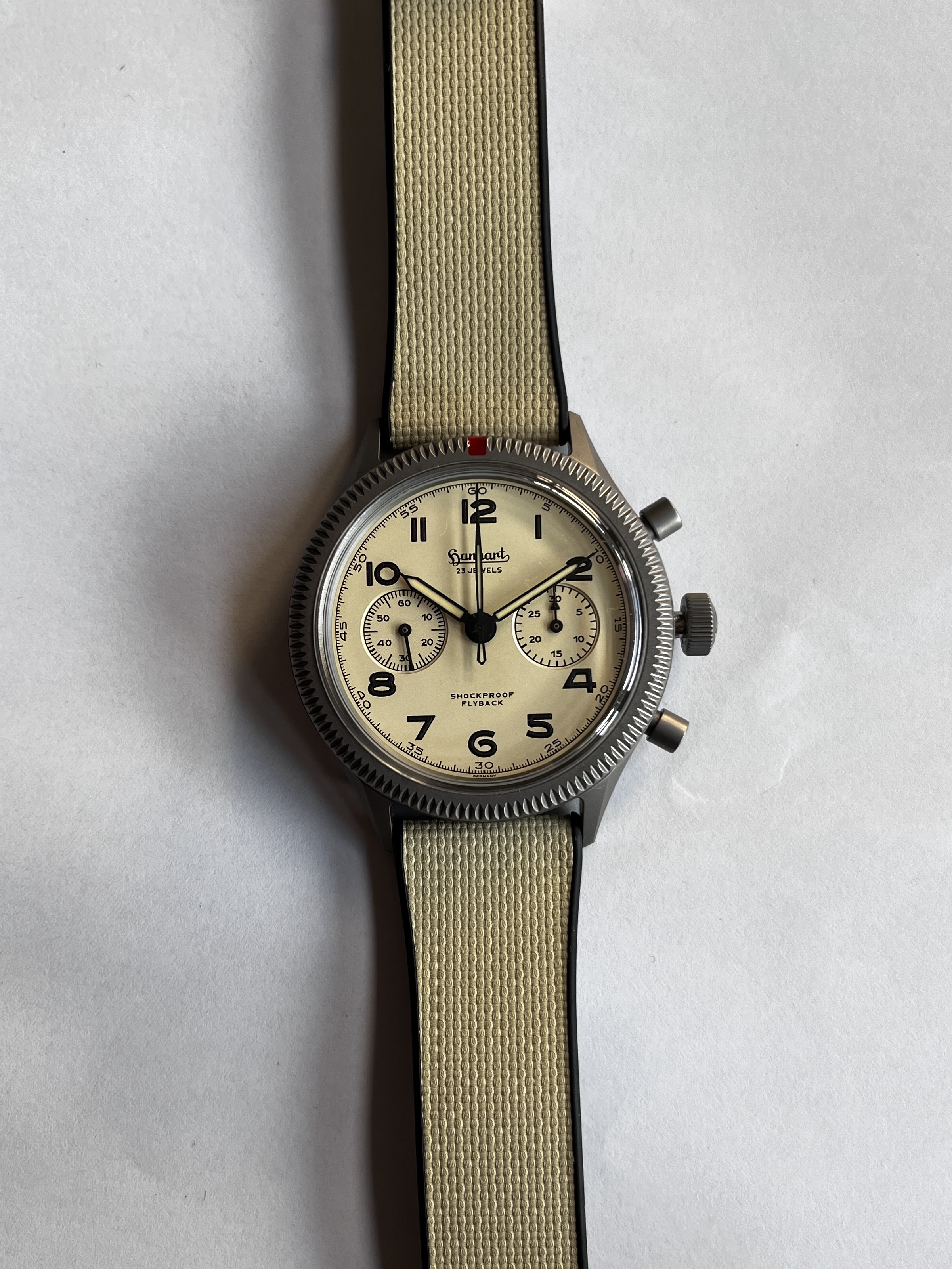
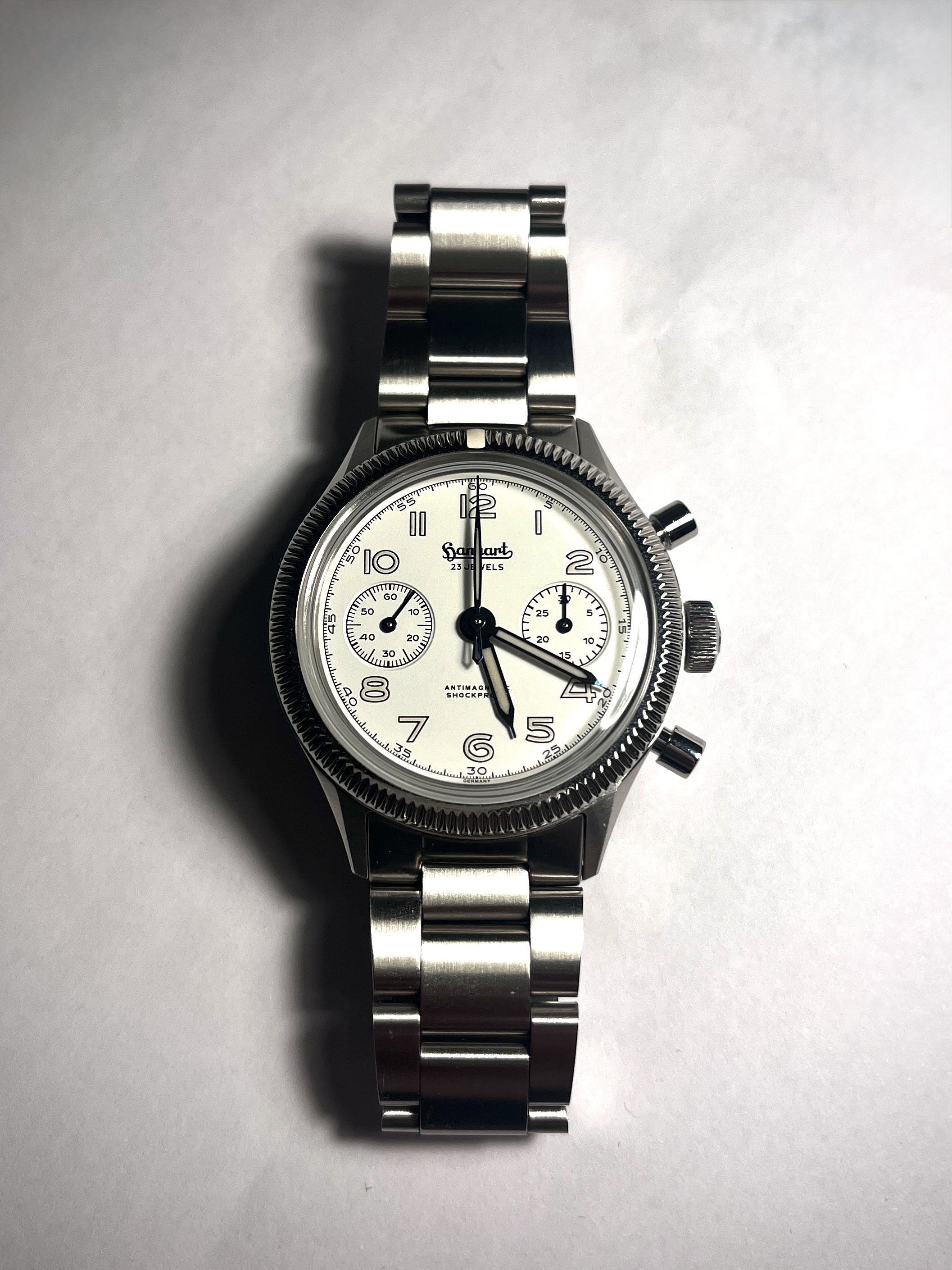
The piece we are getting for review is one of their newest models, the handwound chronograph 415 ES reverse panda. I feel important to note, as we head into this focus on Hanhart, that we are not getting paid for the coverage. We will be showing it off on our socials. We will show our first impressions as well as give a short 90-second review of the piece. If you want to check that, watch out; I will link it here.

Our story begins in 1856 in the small village of Diessenhofen in Switzerland. The small town is built mostly in a medieval style and sits on the river Rhine, which marks the natural border of Germany and Switzerland. Currently it has a population of just over 4.000 inhabitants. In 1856, a man by the name of Johann Adolf Hanhart was born. Hanhart was a man of action, with dreams and aspirations bigger than the small village where he was born.
In 1882, Hanhart made an advertisement in the local paper telling the people living in Diessenhofen and the area surrounding it that he had just bought a store and was moving into the premises to open a watch shop. The store was located on Hauptstraße 33. The advertisement went live on July 1st, 1882, in the paper Anzeiger am Rhein.

20 years later, the company makes a big move as they move to Schwenningen in the black forest of Germany. This is the place where Hanhart had much success, and the innovations achieved made their mark in the 1920s. These new innovations would not come about until the youngest son of Johann joined the company. Willhelm Julius was born in October of 1902.
Now, if there is anything you should know about Willhelm, it is that he was an avid sports enthusiast and a visionary. In 1924, only 4 years after he joined the company at only 18 years old, he made his first big contribution. The story goes that a year prior, in 1923, Willhelm took part in an athletics festival. The organizers of said festival were having a difficult time finding four stopwatches of varying quality. At this point, these stopwatches either had a monopusher or just one pusher; they also came exclusively from Switzerland, thus being incredibly expensive. Willhelm sees this and starts work with a watchmaker in designing and developing the first affordable mechanical stopwatch on the market, and with it, they start their long lineage of stopwatches and chronographs.

At the half-century mark in this Hanhart company journey, Johann Adolf Hanhart passed away at 76 years old. His unfortunate passing coincides with a priority realignment within the company as they eliminate the retail part of their business. This decision was a huge success for the company and helped shape their operations today. In 1932, at the time of their decision, they employed 30 people.
Two years later, in 1934, Hanhart opened a new factory in the black forest. This time in Gütenbach, this new site allowed them to start producing more watches and, more importantly, it allowed them to research and develop more complicated watches while having the extra capacity to produce them. This became evident very quickly as only a year later in 1935 they made their first double-hand stop watch, and in 1938 they made they’re first chronograph. Hanhart still uses this site to make their stopwatches.

As I said in the previous paragraph, they made their first chronograph in 1938. This watch had a single pusher and a caliber named the caliber 40. This watch marked the beginning of Hanhart finding their true calling as they have been producing premier chronographs ever since. This watch was then remade in 2003. The more important chronograph came in 1940 as they started commercial production of their first dual pusher chronograph. The truth is that a year before, they made a Tachy Tele model, which was a military-issued pilot watch and not commercially produced. This dual pusher watch launched with a new Caliber 41 movement and had the iconic red reset pusher.
After the war, production got halted between 1945 to 1948, as Willy Hanhart returned after being acquitted of special war guilt. Hanhart started producing watches for the French military and the reestablished small German navy. At the start of the 1950s, production was back in full force. As Willy returned, we also saw the first version of the Hanhart admiral chronograph. This time is one of success, as in 1952 they took part in Baselworld for the first time, and in 1960 they became a market leader in the production of stopwatches.

As the 60s rolled around and we headed toward a time of turmoil in the watch world with the quartz crisis. In 1963, Hanhart opened a new production facility in Neukirch. In 1972, as the quartz crisis was in full effect after a successful development of a quartz movement business was on the rise and they fend off attacks from the east as their new quartz movements were selling by the millions. In 1981, they released a new quartz movement named 3305. A year later, they sold 40 million units of the 3305 caliber.
A year later, in 1983, Klaus Eble takes over the company. Klaus is Wilhelm Hanhart’s son-in-law. Klaus earned his way up in the company and went through the ranks as he had been working there since 1966.

During Klaus’s time, Hanhart had to navigate strange tides as the watch industry sat at a weird turning point after the dust had settled in the wake of the quartz crisis. The brand moved back into making mechanical chronographs in the 1990s and has kept that direction ever since. Today, the brand makes fantastic watches at a good price. We will go into more detail on the current state of Hanhart as we look at the new 415 ES reverse panda chronograph they released a few weeks ago. That review will be released in a few days.
To summarize, the brand has a rich and important history spanning over 140 years. They have specialized in stopwatches and chronographs, and that specialisation has led them to be a leader in chronographs in their price range, making them fantastic value for money. The designs are vintage and timeless, and they always have and still welcome change and different needs of consumers.
Through this research, I have learned a lot about a brand I knew very little about. I am extremely excited about seeing what they do next, as I do like many of their designs and business practices. They do, of course, have issues, many of them being similar to the one we talked about in our DOXA article. They have mastered chronographs, but despite making more, they do struggle a bit to make it a big part of their identity. The designs are, for the most part, extremely safe, which I don’t mind, but it hurts them when it comes to customer retention, as they don’t have too many truly unique pieces.
All in all, I have loved making this article, and I will look forward to the opportunity of doing more of these deep dives. I hope you enjoyed. Until next time.


Leave a Reply